
Responsible Football Betting — Recognising When the Fun Stops
 Available in US
This Page Exists Because Betting Can Go Wrong
I have written thousands of words on this site about finding edges, building models, and managing bankrolls. All of that assumes the reader is betting within their means, with money they can afford to lose, and deriving genuine enjoyment from the process. For most people, that is the reality — football betting is a hobby that adds a layer of engagement to the sport they love. But for a meaningful minority, betting crosses a line from entertainment into harm, and the transition is often invisible to the person experiencing it.
The numbers are worth confronting directly. Around 30% of young people in the UK had some experience of gambling in 2025, up from 27% the year before. Tim Miller, then Executive Director of Research and Policy at the Gambling Commission, attributed the increase primarily to greater participation in legal and unregulated forms of gambling rather than underage access to licensed products — but the trend underscores that gambling is deeply embedded in British culture, and football betting sits at the centre of that culture. With 5.8% of the UK population placing football bets and 47% participating in some form of gambling, the scale means that even a small percentage experiencing harm translates to hundreds of thousands of individuals.
This guide is not a lecture. It is a practical resource for recognising when betting has become harmful and for accessing the tools and support that exist specifically to help.
Warning Signs That Betting Has Shifted From Hobby to Problem
The transition from recreational betting to harmful betting does not announce itself. There is no single moment where a switch flips. Instead, patterns develop gradually — each one minor in isolation, collectively forming a trajectory that the person involved is the last to recognise.
I have seen it in people I know. The first sign is usually chasing — increasing stakes after losses in an attempt to recover quickly rather than accepting the loss and moving on. Chasing feels like strategy in the moment. It is the opposite. The second sign is time displacement — spending hours on betting research, checking odds, and monitoring live bets at the expense of work, relationships, or sleep. When betting analysis starts competing with your job for attention during working hours, something has shifted. The third sign is secrecy — hiding the extent of your betting activity from family or friends, minimising losses when asked, or maintaining a separate bank account that your partner does not know about.
A fourth indicator is less obvious but equally significant: emotional dependency on outcomes. If a winning Saturday produces genuine euphoria and a losing Saturday produces genuine despair — mood swings that affect how you interact with the people around you — the betting has moved beyond entertainment. Entertainment does not produce emotional highs and lows that bleed into the rest of your life. Addiction does.

None of these signs in isolation means you have a gambling problem. But if two or more are present consistently over a period of weeks, it is worth pausing and honestly assessing whether your relationship with betting is still healthy. The 1.2% of young people who scored 4 or more on the DSM-IV problem gambling indicator in 2025 did not start by recognising themselves as problem gamblers. They started as recreational participants who did not notice the escalation until it was well advanced.
Tools That Every Licensed Bookmaker Must Offer
UK gambling regulation requires every licensed operator to provide a suite of responsible gambling tools. These are not optional add-ons or premium features. They are mandatory, and they exist because the industry and the regulator both recognise that some customers need structural guardrails to keep betting within safe limits.
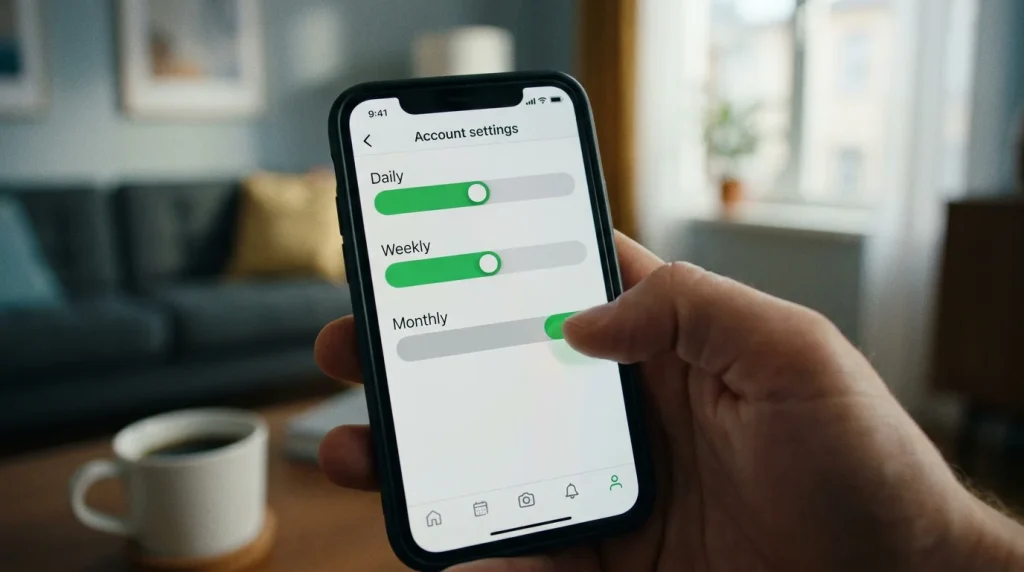
Deposit limits are the most important tool available to you. Every UK bookmaker allows you to set daily, weekly, and monthly caps on how much you can deposit into your account. Once the limit is reached, no further deposits are accepted until the next period begins. The limit can be decreased immediately but can only be increased after a cooling-off period — typically 24 to 72 hours — which prevents impulsive upward adjustments during a losing session. I recommend every punter set a weekly deposit limit before placing their first bet, regardless of whether they consider themselves at risk. The limit is a floor of discipline, not an admission of weakness.
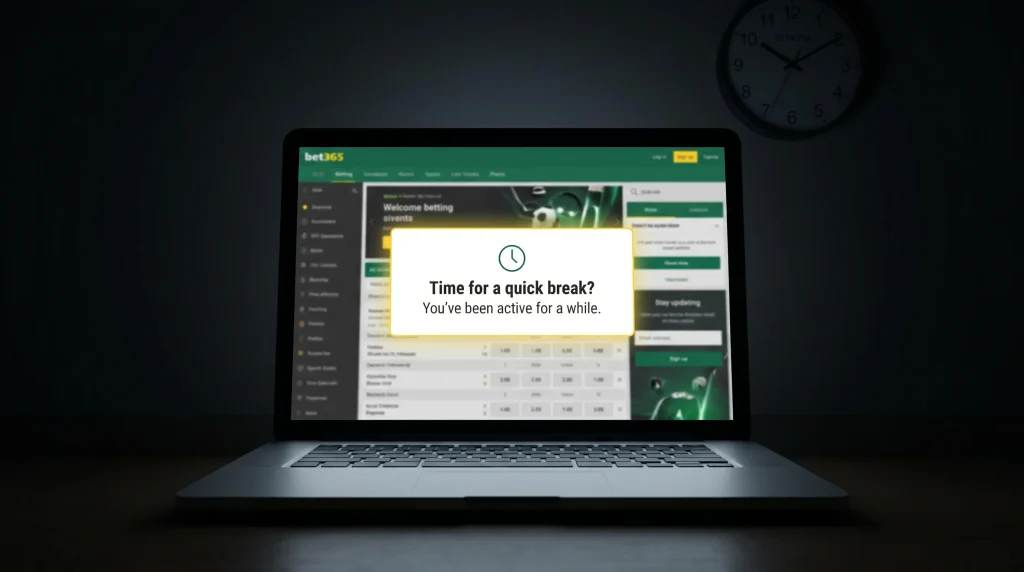
Reality checks are timed notifications that interrupt your betting session to tell you how long you have been active and how much you have staked. They break the trance-like state that extended live betting sessions can produce — the state where time disappears and stakes escalate without conscious decision. Setting a reality check at 30-minute intervals is a practical default for anyone who bets in-play regularly. In-play betting accounts for more than 70% of UK sports wagers, and the speed of live markets makes it the environment where loss of perspective happens most easily.
Time-outs allow you to temporarily exclude yourself from a single operator for a period of your choosing — typically 24 hours, 7 days, or 30 days. During the time-out, you cannot log in, place bets, or access your account. This is a useful circuit-breaker for punters who recognise they are on tilt or who have exceeded their self-imposed spending boundaries. It is a pause, not a permanent step, and it preserves your account and balance for when you return.
Self-Exclusion and Where to Get Help
For punters who need more than a temporary pause, self-exclusion provides a comprehensive block. GamStop is the UK’s national self-exclusion scheme. Registering with GamStop prevents you from accessing all UKGC-licensed online gambling operators for a minimum of six months, with options to extend to one year or five years. The registration is free, takes a few minutes, and applies across the entire licensed market — you do not need to contact each bookmaker individually.
GamStop is not a perfect system. It does not cover unlicensed offshore operators, which is one reason the Gambling Commission has invested GBP 26 million over three years to combat the unlicensed market. It also does not cover high-street betting shops, which have their own separate self-exclusion schemes. But for the 78.47% of UK sports betting that takes place online, GamStop provides a single point of access to exclude yourself from every licensed operator simultaneously.
If you or someone you know needs support beyond self-exclusion tools, several UK organisations provide free, confidential help. The National Gambling Helpline operates around the clock and offers advice, information, and referral to treatment services. GamCare provides online chat, forum support, and face-to-face counselling through a network of centres across the UK. The NHS National Problem Gambling Clinic in London offers structured treatment programmes for severe gambling disorder, and similar clinics operate in Leeds, Manchester, and other cities.
I want to be direct about something: seeking help is not failure. It is the most rational decision a person can make when they recognise that their own behaviour is causing harm. The same analytical mindset that makes a good bettor — identifying patterns, assessing risk, making evidence-based decisions — applies to recognising when betting itself has become the risk. If the data says your betting is causing financial, emotional, or relational harm, the evidence-based decision is to act on that data, not to override it with hope that things will improve on their own. If you are interested in the psychological mechanics of how betting can distort decision-making, the cognitive biases guide covers the specific mental traps that escalate harmful patterns.

How do I set deposit limits with a UK bookmaker?
Log into your account and navigate to the responsible gambling or account settings section. Every UKGC-licensed operator is required to offer daily, weekly, and monthly deposit limit controls. Set your preferred limit — it takes effect immediately. Decreasing a limit is instant; increasing one requires a cooling-off period of 24-72 hours depending on the operator. I recommend setting a weekly limit before your first bet, treating it as a non-negotiable boundary.
What is GamStop and how does self-exclusion work?
GamStop is the UK"s free national self-exclusion scheme for online gambling. Registering at gamstop.co.uk blocks your access to all UKGC-licensed online betting and gaming operators for a minimum of six months, with options for one year or five years. Registration takes a few minutes and applies across the entire licensed market. It does not cover unlicensed offshore operators or high-street shops, which have separate exclusion schemes.
Articles
Published by the Football Bet Today team.
