
Cognitive Biases in Football Betting — How Your Brain Sabotages Your Bets
 Available in US
Your Worst Enemy at the Bookmaker Isn’t the Odds — It’s You
I spent the first five years of my betting life convinced that my problem was information — that if I just found better data, better tipsters, better models, the profits would follow. It took a painful losing streak in 2018, followed by an honest review of my bet log, to realise the problem was not what I knew. It was how my brain processed what I knew. I was making the same cognitive mistakes repeatedly, and every mistake was costing me money in a way that no amount of data could fix.
About 10% of the UK population participates in online sports betting, and the vast majority of those punters lose long-term not because they lack football knowledge but because human psychology is systematically misaligned with the requirements of profitable betting. Our brains evolved to make fast decisions under uncertainty using mental shortcuts — heuristics — that work well for survival but terribly for evaluating probabilities and managing risk. Understanding these shortcuts is as important as understanding xG or bankroll management, and arguably more important because biases operate invisibly. You do not notice them working. You just notice the losses.

Anchoring, Confirmation and Recency — the Big Three
Three biases account for the majority of costly mistakes I see in my own betting and in the betting communities I am part of. They operate independently but often reinforce each other, creating a compound error that is larger than any single bias alone.
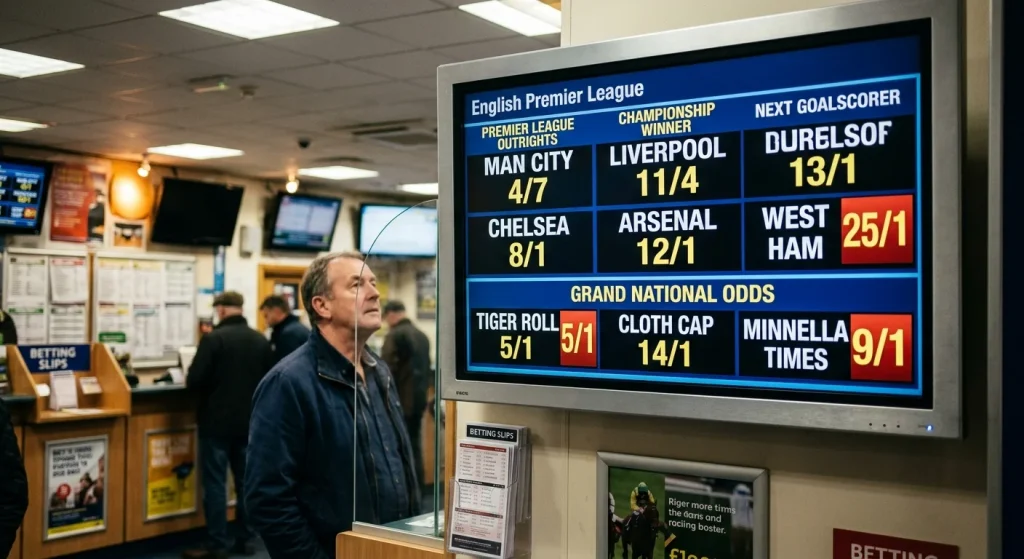
Anchoring is the tendency to fixate on the first piece of information you encounter and let it disproportionately influence your judgement. In betting, the most common anchor is the bookmaker’s price itself. You see a home win at 1.80 and your brain registers that as “the market thinks this team has about a 55% chance.” From that point, your analysis is unconsciously tethered to 55%. Even if your model produces 48%, the anchor pulls your assessment upward. I have caught myself adjusting my model’s output to “feel right” relative to the market price — which defeats the entire purpose of having an independent model. The fix is to generate your probability estimate before looking at the odds. Do the analysis blind, write down the number, then compare against the market. If the order is reversed, anchoring is almost unavoidable.
Confirmation bias is seeking out information that supports what you already believe and discounting information that contradicts it. If you have decided to back a home win, you will unconsciously focus on the home team’s recent winning run and downplay the away team’s strong defensive record. Every stat that supports your position looks meaningful. Every stat that undermines it looks like noise. The antidote is to actively argue the other side before placing any bet. After building the case for a home win, spend two minutes building the strongest case against it. If the opposing case is stronger than you expected, the bet might not be worth taking.
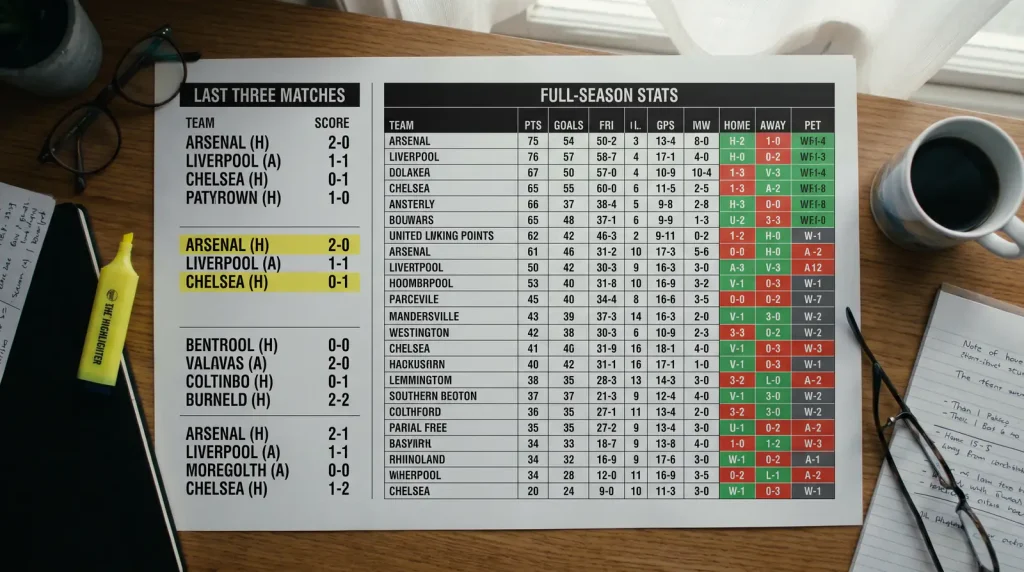
Recency bias is overweighting recent events relative to longer-term patterns. A team that lost its last two matches “looks terrible” even if their season-long xG profile is excellent. A team that won its last three “is in great form” even if those wins came against the three weakest sides in the league and the underlying performance metrics were mediocre. Recency bias is the reason punters overreact to short-term form and underreact to structural quality — and it is the reason my model uses eight-to-ten-match rolling averages rather than last-three-match snapshots.
Tilt Management — Recognising and Breaking the Spiral
Tilt is a term borrowed from poker, and it describes a state where emotional frustration — usually from losses — overrides rational decision-making. In football betting, tilt manifests as chasing losses, increasing stakes, betting on matches you have not researched, or abandoning your staking plan in an attempt to “get even.” I have been there. Most honest punters have been there. The question is not whether you will experience tilt — it is how quickly you recognise it and what systems you have in place to stop it.
Youth gambling participation in the UK has risen — 30% of young people had gambling experience in 2025, up from 27% the previous year. Tim Miller at the Gambling Commission noted that this increase is driven not by underage gambling but by participation in legal or unregulated forms like private betting between friends. The broader point is that gambling behaviour starts early and patterns — good and bad — embed themselves quickly. Tilt management is a habit that needs to be built deliberately, not a skill that develops naturally.

My tilt protocol is simple and written down on a card next to my desk. Step one: if I notice any of the following — checking betting apps more than three times in an hour, considering a bet on a match I have not analysed, or feeling angry about a recent result — I close the app and do something else for 30 minutes. Step two: if I have lost three consecutive bets, I stop betting for the rest of the day regardless of whether I feel tilted. Step three: if my bankroll has dropped 10% in a single week, I take two days completely away from betting before reviewing my recent selections for analytical errors versus normal variance. These rules are not sophisticated. They do not need to be. They just need to be followed, and they need to be set up before the tilt occurs — not during it.
Debiasing Techniques for Punters
Knowing your biases exist is necessary but insufficient. You need practical techniques to counteract them in the moment of decision.
The most effective technique I use is the pre-mortem. Before placing any bet, I ask myself: “If this bet loses, what was the most likely reason?” If the answer is a factor I have not adequately considered — an injury I overlooked, a tactical mismatch I underweighted, or a historical pattern I ignored — the bet gets reconsidered. If the answer is simply “variance” — the team played well but the ball did not go in — the bet stays. The pre-mortem forces you to confront potential failure before it happens, which counteracts the natural optimism bias that makes every bet feel like a winner at the moment of placement.
Another technique is the decision journal. For every bet, write down not just what you bet and why, but how confident you feel on a 1-10 scale and what your emotional state is. After 100 bets, review the journal and look for patterns. Do you bet more when you are bored? Do your worst bets cluster on Friday evenings after a long week? Are your most confident bets actually your most profitable, or is confidence uncorrelated with results? The journal reveals patterns that your memory distorts. My journal showed me that I was significantly less profitable on bets placed after 9pm than on bets placed before 6pm — probably a fatigue effect. I now have a hard rule against placing bets after 8pm.

A third technique is accountability. Share your bets with someone — a fellow punter, a friend, a private log that you review honestly. The mere act of knowing someone else will see your decisions reduces impulsive betting. If you would be embarrassed to explain a bet to a knowledgeable friend, you probably should not place it. For structured approaches to managing the financial side of tilt and drawdowns, the bankroll management guide covers hard rules and drawdown limits that complement the psychological techniques described here.

What is the most common cognitive bias in football betting?
Recency bias — overweighting the last two or three results at the expense of longer-term data — is the most common and most costly bias I encounter. It drives punters to overreact to short-term form, chase in-form teams at shortened prices, and abandon sound selections after a brief losing run. Using rolling averages of eight to ten matches rather than recent-form snapshots is the most effective structural defence against it.
How do I know when I am on tilt?
Common tilt indicators include checking betting apps compulsively, considering bets on matches you have not analysed, feeling anger or frustration about recent results, and wanting to increase stakes to recover losses. If you notice any of these behaviours, treat them as a signal to step away from betting for at least 30 minutes. The earlier you catch tilt, the less damage it causes. A written protocol with specific triggers and responses, prepared in advance, is more effective than relying on self-awareness in the moment.
Articles
Created by the "Football Bet Today" editorial team.
