
League One and League Two Tips — Data Edges in England's Lower Tiers
 Available in US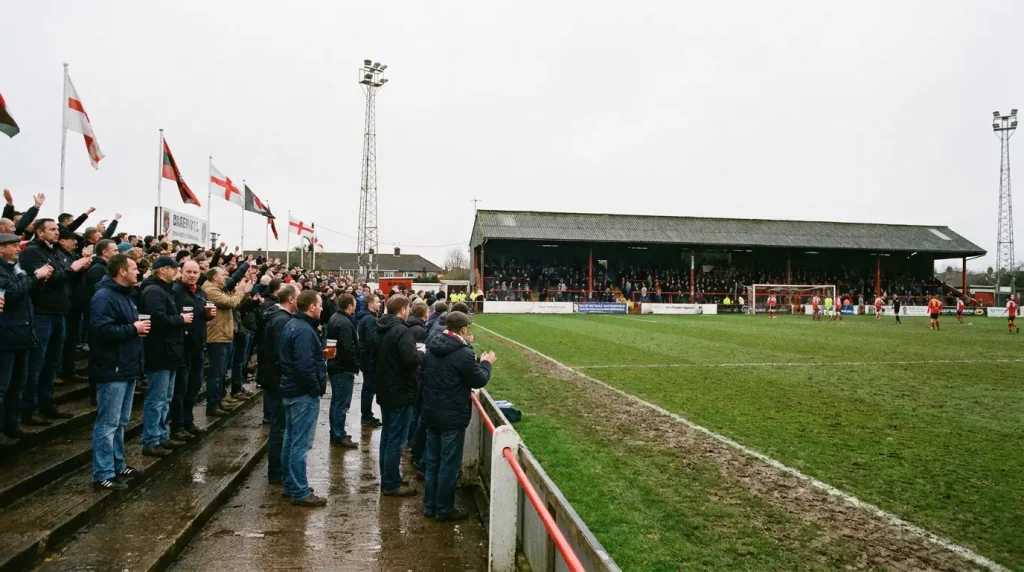
Lower Leagues — Where Bookmaker Models Are Weakest
I made my first consistent profit not on Premier League matches but on League Two fixtures that most punters could not name the teams in. The logic was simple: bookmakers allocate their best pricing resources to the markets that attract the most money. League Two is not one of those markets. The models are thinner, the data inputs are sparser, and the odds are set with less precision than anything in the top two divisions. For a punter willing to do the research, that pricing gap is an invitation.
The UK remote betting sector generated £2.6 billion in gross gaming yield from sports in the year to March 2025, with football contributing roughly half. But the distribution of that football revenue is heavily skewed toward the Premier League and Championship. League One and League Two attract a fraction of the betting volume, which means bookmakers face less competitive pressure on their pricing. A two-percentage-point pricing error on a Premier League match gets exploited within minutes by sharp money. The same error on a League Two fixture might sit uncorrected until kick-off.
The trade-off is clear: lower leagues offer wider edges but demand more research effort. The data is harder to find, the team news is less widely reported, and the analytical infrastructure that exists for the Premier League — xG models, pressing metrics, shot maps — is patchy or absent for the third and fourth tiers. You are trading convenience for opportunity.

Where to Find Reliable Lower-League Stats
This is the practical barrier that stops most punters from betting lower leagues, and overcoming it is half the battle. With roughly 290 million online sports bets placed monthly in the UK, the demand for data at all levels should be enormous. In reality, the supply for League One and League Two lags far behind the top two divisions.
The most reliable free data for lower leagues is results-based: league tables, recent form, head-to-head records, and goal-scoring patterns. These are available on multiple platforms with daily updates. What you will not find easily is advanced metrics — xG is published for League One by some providers but coverage of League Two is inconsistent, and metrics like PPDA or progressive passing data are essentially unavailable below the Championship.
My workaround is to build a stripped-down model that relies on metrics available at every level. Goals scored and conceded over the last eight matches — home and away separately. Shots on target for and against, which is published in match reports even at League Two level. Clean sheet frequency. And — crucially — the pattern of results rather than the results themselves. A team that has won its last three by 1-0, 2-1 and 1-0 looks identical in the form table to a team that won 3-0, 4-1 and 3-0, but the underlying dynamics are completely different. The first team is grinding tight victories that could easily have been draws. The second team is dominating. The betting implications are different even if the points tally is the same.
Home Advantage in League One and League Two
Home advantage is stronger in the lower leagues than in the Premier League, and this is one of the most consistently exploitable patterns in English football betting.
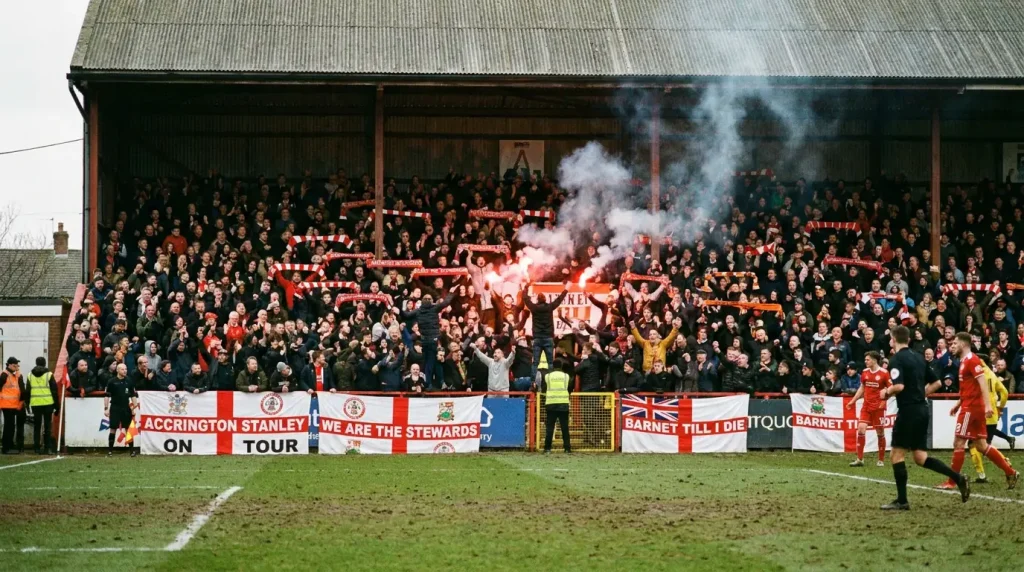
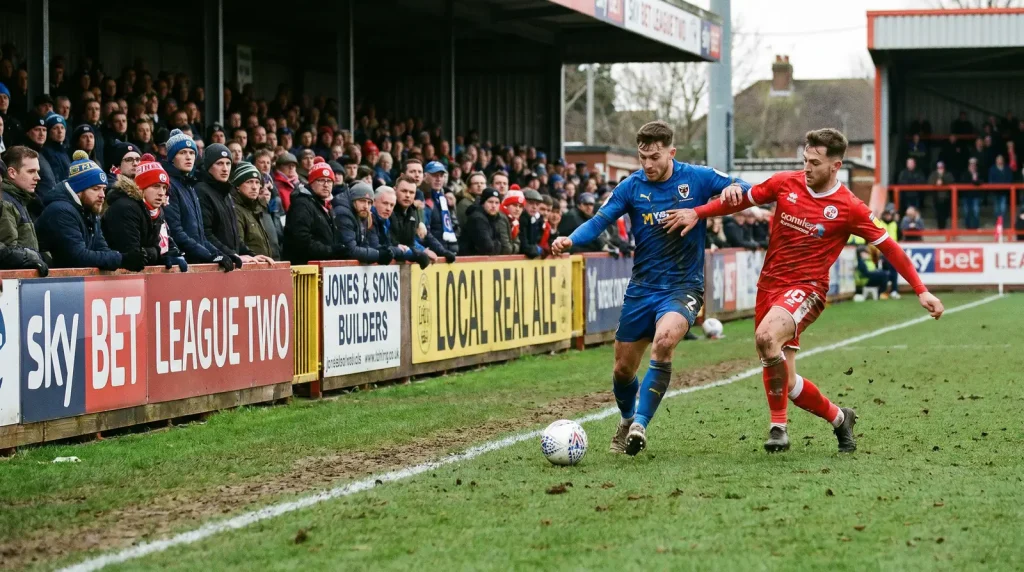
In the Premier League, home teams win roughly 44-46% of matches in a typical season. In League One, that figure rises to 47-50%. In League Two, it can reach 50-52%. The reasons are partly atmospheric — lower-league grounds are smaller, tighter, and louder relative to capacity — and partly logistical. Travel in the lower leagues is longer in relative terms. A League Two side travelling from Plymouth to Carlisle faces a six-hour coach journey each way. Premier League sides fly. The fatigue and disruption of long coach journeys for away sides in the lower leagues is a real factor that the market sometimes underweights.
I apply a home advantage adjustment to my lower-league model that is 3-5 percentage points stronger than the equivalent Premier League adjustment. This shifts my probability estimates in favour of home sides, particularly in matches between mid-table teams where the market has no strong opinion either way. The result is a systematic tilt toward home wins in League One and League Two that has produced a positive return across four consecutive seasons in my records.
One caveat: newly promoted sides from the National League into League Two often show abnormally strong home advantage in their first season, driven by supporter enthusiasm and opponents’ unfamiliarity with the ground. That effect fades by the second season but is worth noting for early-season betting.
End-of-Season Motivation and Dead Rubbers
Lower-league football has sharper motivational contrasts at the end of the season than any other level of English football. The stakes are existential in a way that Premier League survival — cushioned by parachute payments and television revenue — is not.
A League Two side fighting relegation faces dropping into the National League, where revenue plummets, attendances shrink, and the path back is long and uncertain. That desperation produces a measurable effect: relegation-threatened League Two sides outperform their season-long xG in the final eight to ten matches of the season. They play with an intensity that lifts their performance above baseline, and the market — which prices based on season averages — often lags behind this improvement.
At the other end, promotion-chasing sides in League One enter the final stretch with enormous financial incentive. Promotion to the Championship is worth tens of millions in television revenue. Teams in the automatic promotion places or play-off spots often strengthen in January specifically for the run-in, and their motivation in spring fixtures is maximal. I look for promotion-chasing sides who have strengthened in January and whose xG output has increased since the window — that combination of motivation and improved personnel is a strong betting signal.
Dead rubbers — matches between mid-table sides with nothing to play for in the final four to six weeks — present the opposite opportunity. Motivation drops, managers experiment with fringe players, and the results become unpredictable. The bookmaker’s model, based on season-long averages, cannot capture the motivational void. I avoid betting on lower-league dead rubbers entirely unless the match has a specific angle that overrides the general unpredictability. For a look at how similar variance plays out one level up, the Championship guide covers the EFL’s second tier in detail.

Is home advantage stronger in League One and League Two than higher tiers?
Yes. Home win rates in League One and League Two typically run 3-6 percentage points higher than the Premier League average. Smaller, tighter grounds with atmospheric home crowds, longer away travel distances by coach rather than flight, and less tactical sophistication that might neutralise home advantage all contribute. This effect is strongest in League Two and gradually diminishes as you move up the pyramid.
How do smaller squad sizes affect lower-league form consistency?
Lower-league squads typically rely on 15-17 regular players with limited quality depth. An injury to a key player — a first-choice centre-back or main striker — has a proportionally larger impact than in the Premier League where quality replacements are available. This makes lower-league form more volatile, particularly during fixture congestion or when suspensions overlap with injuries. Monitoring injury news is disproportionately important at this level.
Articles
Created by the "Football Bet Today" editorial team.
