
Premier League Betting Tips — Weekly Data-Led Analysis
 Available in US
Why the Premier League Is the Most Bet-On League on Earth
I have been analysing Premier League matches professionally for the better part of a decade, and the single hardest lesson to internalise is this: the league that gets the most attention from punters is, paradoxically, the hardest to beat. Not because the football is unpredictable — every league has variance — but because the market is so efficient that finding genuine edges requires significantly more work than in any other division.
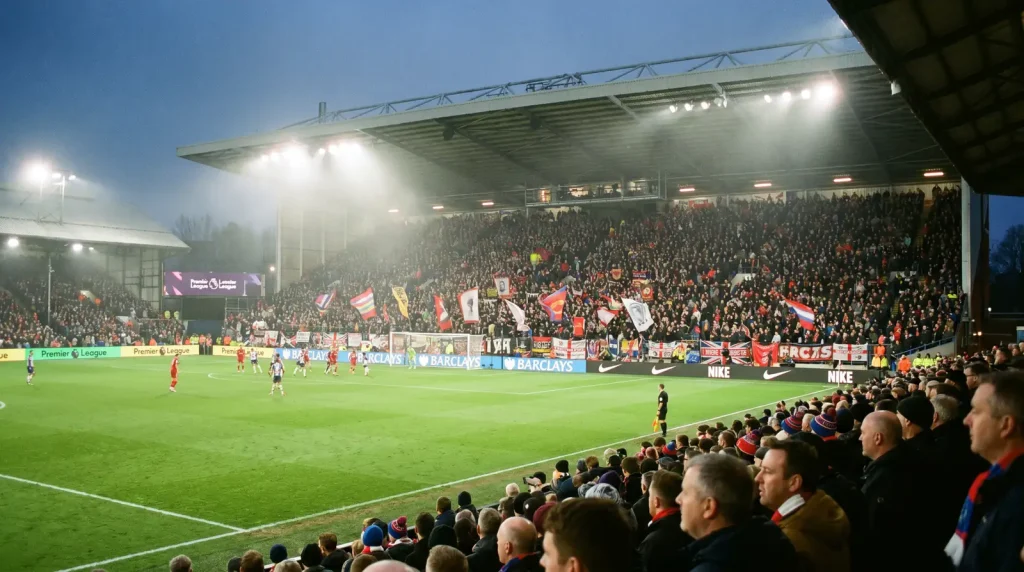
The numbers explain why. The UK’s remote casino, betting and bingo sector generated 7.8 billion pounds in gross gaming revenue in the financial year to March 2025, with football contributing 1.3 billion of that from remote betting alone. The Premier League absorbs the lion’s share of that football money. Every match attracts pricing attention from dozens of bookmakers, syndicates, and algorithmic trading operations. By the time you see an odds board for a Saturday lunchtime kick-off, the price has been pounded into shape by the smartest operators in the industry.
That does not mean it is a waste of time. It means you need a different approach — one that targets the specific areas where even deep markets leave gaps. Over the next five sections I will walk through the structural features of Premier League betting that create those gaps: market efficiency patterns, rotation windows, home-away splits, the special case of newly promoted sides, and the gambling sponsorship ban that is about to reshape the commercial landscape of English football. The Championship offers a softer market in many respects, but if you are betting the top flight — and most of you are — this is how to do it with your eyes open.
Market Efficiency in the Premier League — Harder to Beat?
Two winters ago I ran an experiment. I built a simple model — xG-based, incorporating home advantage and form over the last eight matches — and tested it against closing odds on every Premier League fixture that season. Against the closing line, my model identified just 34 matches with a predicted edge above 3%. In the Championship, using the same model, it flagged 67. In League One, 89. The pattern was unmistakable: the higher the profile of the league, the tighter the market.

Premier League match-result markets typically carry a bookmaker overround of 3-5%, compared with 6-8% in the Championship and 8-12% in Leagues One and Two. Lower overround means less margin baked into the price, which is good for punters in isolation — but it also means the “true” probability is closer to the offered price, leaving less room for you to find an edge. Flutter Entertainment, the group behind several major UK-facing brands, generated approximately 1.7 billion dollars in UK and Ireland sports betting revenue in 2024 alone, giving you a sense of how much capital flows into pricing these markets.
Where does inefficiency still exist? Three areas stand out consistently in my data. First, matches involving sides in contrasting form cycles — a top-six club in a poor run of three or four results priced as though nothing has changed, or a bottom-half side on a winning streak still offered at generous odds because the market remembers their early-season struggles. Second, midweek Premier League fixtures, where rotation creates genuine uncertainty that the market sometimes underweights. Third, fixtures in the final six matchweeks of the season, where motivation asymmetry — one side with everything to play for, the other in mid-table limbo — creates pricing anomalies that persist for 48-72 hours before the market corrects.
The efficiency of the Premier League market is not a reason to avoid it. It is a reason to be more selective. Where I might place three or four bets per matchweek in the Championship, I average one to two in the Premier League — but those one to two bets carry a higher average edge because I have filtered ruthlessly.
One technique I use to identify value in efficient markets is tracking the price movement from opening to closing. If a Premier League side opens at 2.50 on Monday and closes at 2.20 by Saturday lunchtime, that 12% contraction tells you the market has moved towards that outcome — usually because informed money (syndicates, model-driven bettors) has backed it. I do not chase closing-line value; instead, I look for matches where my own analysis aligns with the early-week price and get on before the contraction happens. Beating the closing line consistently is one of the strongest indicators of genuine skill in sports betting, and it is easier to do early in the week when prices are still forming.
Squad Rotation and Fixture Congestion as Betting Angles
Christmas 2023 taught me a lesson I should have learned years earlier. I backed a top-four side at a short price to win a Boxing Day fixture, ignoring the fact that they had played three days prior and had a New Year’s Day match already confirmed. The manager rotated five players, the side looked disjointed, and they drew 1-1 against a relegation candidate. I lost the bet, and the writing had been on the wall for anyone willing to look at squad management patterns.
Fixture congestion in the Premier League is not evenly distributed. Sides competing in the Champions League or Europa League play 50-60 competitive matches per season, compared with 38 for sides with no European or deep cup commitments. That additional 30-50% workload forces rotation, and rotation degrades team cohesion — especially in defensive structure, where communication and positional familiarity are paramount.

I track rotation two ways. First, I monitor the number of changes from the previous starting eleven — a simple count that is available from every team-sheet source. Sides making four or more changes to their starting lineup underperform their seasonal average by roughly 8-12% in match-result probability, based on my tracking across the last four Premier League seasons. Second, I look at minutes-per-player distribution in the previous two matches. If a manager has used 18 or more players across two fixtures, the squad is in heavy rotation mode, and the starting eleven for the next match becomes genuinely uncertain until team news drops.
The betting angle is straightforward: when a side is in heavy rotation, their match-result price should be longer than their overall form suggests. If the market has not adjusted — and it often does not until team news is confirmed — the value sits with either their opponent or the draw. I have had particular success backing draws in midweek Premier League fixtures where both sides are rotating, because two disrupted line-ups tend to cancel each other out, producing cautious, low-quality football that gravitates towards stalemate.
Conversely, sides with no European commitments and early cup exits have a significant freshness advantage in February and March, when the season’s accumulated workload starts to bite. I specifically look for bottom-half sides with clean schedules facing top-six clubs in midweek fixtures during this window. The price on the underdog or draw is frequently generous.
International breaks add another layer. The October and March windows pull 15-20 players from most Premier League squads for two midweek fixtures thousands of miles from their club base. The first match back after an international break produces a measurable uplift in draws and upsets — partly through fatigue, partly through disrupted preparation time. I flag every post-international-break fixture as a potential draw-value spot and have found a small but persistent edge there over the last four seasons.
Home-Away Performance Splits by Table Position
Last season I pulled a dataset that surprised me. The top six Premier League sides won 78% of their home matches but only 52% of their away matches — a 26-percentage-point gap that was wider than any of the previous five seasons. The bottom six had an even starker split: 35% home win rate versus 12% away. The home advantage is not dead in the Premier League; it is just distributed unevenly, and understanding that distribution is a material edge.
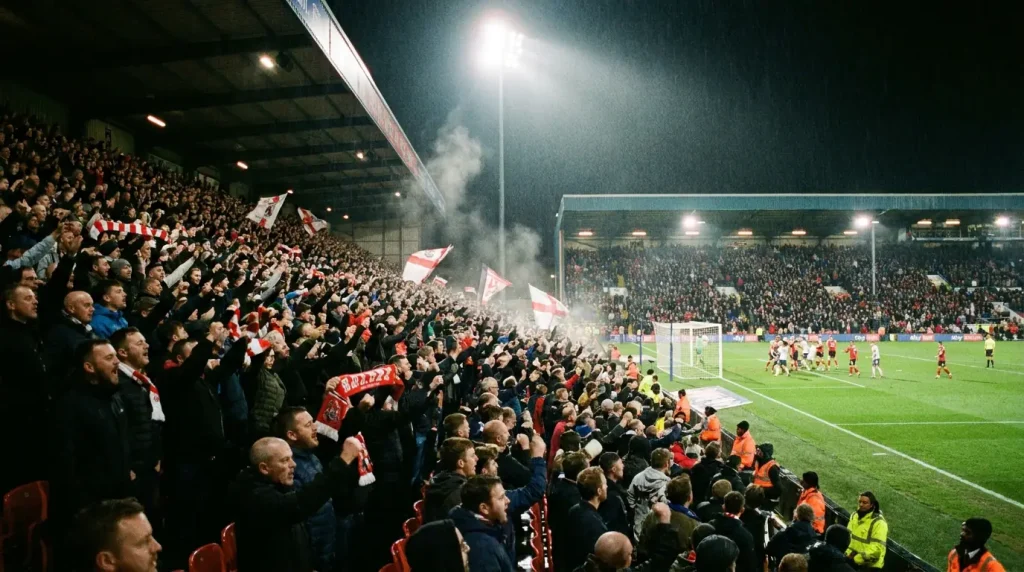
Eleven of the twenty Premier League clubs had gambling sponsors on their shirts in the 2024-25 and 2025-26 seasons, which tells you something about the commercial relationship between football and betting. But the analytical relationship is where the value lies. Home advantage in the top flight is driven by three factors that vary by club: crowd intensity, pitch familiarity, and travel burden on the visiting side. Clubs with compact, atmospheric stadiums — the traditional “tough away day” grounds — generate a measurably stronger home performance lift than those playing in half-empty 60,000-seat arenas early in a midweek fixture.
For betting purposes, I split the table into three tiers: top six, middle eight, and bottom six. Each tier has a distinct home-away profile. Top-six sides are strong everywhere but have marginal home edges that the market prices accurately. Middle-tier sides often have dramatic home-away splits that the market underweights — a mid-table side winning 60% at home but 25% away creates specific fixture-level mispricing when they host a similarly ranked opponent. Bottom-six sides are the most volatile: their home win rate can swing from 40% in one six-match block to 15% in the next, making them unreliable as standalone selections but interesting as underdogs or draw candidates when the fixture context is right.
I apply this analysis every matchweek by flagging fixtures where the home-away split creates a meaningful divergence from the overall form. If a bottom-half side has won four of their last five at home but the market prices them based on their overall record (which includes a run of away defeats), the home price is too long. These situations arise two or three times per matchweek and are among the most reliable edges I track in the Premier League.
Away performance deserves its own note. The Premier League’s travel demands are modest by continental standards — no team travels more than a few hours by coach — but the psychological burden of playing away from home remains significant. Bottom-six sides win just 12% of away fixtures on average, which means backing away wins for struggling clubs is a losing strategy in almost every scenario. The exception is the “nothing to lose” fixture — a relegated side playing out the final weeks of the season sometimes produces unexpectedly free-flowing football away from home, and the market overestimates the home side’s motivation in those dead-rubber scenarios.
Newly Promoted Sides — Early-Season Opportunity Windows
Every August, three new sides arrive in the Premier League, and every August the market gets their pricing slightly wrong. I have tracked promoted sides’ results against pre-match implied probabilities for the last six seasons, and the pattern is consistent: promoted teams outperform their opening-day market pricing in the first eight to ten fixtures before the market adjusts.

The reason is structural. Bookmakers price newly promoted sides based on a combination of their Championship performance, pre-season transfer activity, and broad historical survival rates. What those models underweight is the motivational and tactical honeymoon effect. Promoted squads enter the Premier League with a clear identity forged over a 46-game Championship campaign, a squad that has played together extensively, and an emotional momentum that keeps performance levels high through the opening weeks. The market treats them as the weakest sides in the division from matchday one, but the data says they perform closer to lower-mid-table level in the first quarter of the season.
The edge fades as the season progresses. By November, squad limitations start to show — thinner depth, lower individual quality in key positions, and the tactical adjustments from opponents who have now studied the promoted side’s approach across multiple matches. The market catches up and prices stabilise. But those first eight to ten matchweeks offer a window where backing the promoted side’s home results — either the win or the draw — returns positive expected value at the prices available.
I approach promoted sides with a specific strategy: back them at home in the first quarter of the season, avoid them away, and reassess in November once the sample of Premier League data is large enough to update my model. This approach has produced a flat-staking profit in five of the last six seasons, which is one of the most consistent edges I have found in Premier League betting.
The trap is sentimentality. Once you have backed a promoted side successfully through August and September, it is tempting to keep going even as the form deteriorates. I set a hard rule: after matchweek 12, I treat the promoted side as a regular Premier League club and price them based solely on their top-flight data. The honeymoon is over, the market has recalibrated, and clinging to an early-season edge that no longer exists is one of the quickest ways to give back a season’s worth of profits. Data does not care about narratives, and neither should your staking plan.
Gambling Sponsorship Ban — What Changes for the Market
Starting from the 2026-27 season, gambling brand logos will be banned from the front of Premier League matchday shirts. This is not a minor regulatory tweak — it removes over 100 million pounds of annual sponsorship value from the game in one stroke. Gambling brands currently account for approximately 60% of front-of-shirt sponsorship deals in the Premier League, contributing roughly 130 million dollars of the total 525 million dollar front-of-shirt market.

For punters, the immediate question is: does this change anything about betting on football? The answer is yes, but not in the way most people assume. The ban affects operator marketing, not odds or market availability. Operators positioned for growth, expanding into sports and multi-product experiences, will be better placed to protect margins and drive growth — the shift is strategic, not existential for the industry. Your bets will still be priced the same way; the logos on the shirts will simply belong to different sponsors.
The indirect effect is more interesting. Gambling operators who lose shirt sponsorship will redirect marketing spend towards digital channels — social media, in-app promotions, influencer partnerships. This means more bonuses, more acca boosts, and more free-bet offers competing for your attention online. For the disciplined punter, that is a net positive: more promotional value to extract without the psychological anchor of seeing a bookmaker’s name on your favourite team’s kit every Saturday.
There is also a longer-term market structure question. If the sponsorship ban reduces the visibility of gambling to casual audiences — particularly younger fans who currently see betting brands on almost every shirt — the growth rate of new betting accounts could slow. Fewer new accounts means less recreational money flowing into markets, which in turn could make markets slightly more efficient as the proportion of sharp money increases. I will be monitoring this dynamic closely across the first season of the ban to see whether it has a measurable effect on pricing.
Frequently Asked Questions
Why are Premier League odds generally tighter than lower-league odds?
The Premier League attracts more betting volume, sharper analytical models from bookmakers and syndicates, and a higher proportion of informed money than any other league. This competition drives the overround down — typically 3-5% on match-result markets — meaning the prices are closer to true probability. Lower leagues carry higher overrounds (8-12%) because there is less data, less market scrutiny, and more recreational money shaping the prices.
How does European competition affect domestic league form?
Sides playing in the Champions League or Europa League face 50-60 competitive matches per season compared with 38 for Premier-League-only clubs. The extra workload forces squad rotation, disrupts rhythm, and creates fatigue effects — particularly from January onwards. Midweek European fixtures followed by a Saturday or Sunday league match are prime spots for an upset, especially when the league opponent has a clean schedule.
When is the best time to place a Premier League bet — midweek or matchday?
For match-result bets, waiting until confirmed line-ups drop (typically one hour before kick-off) gives you the most complete information. However, prices on popular outcomes often shorten as matchday approaches and casual money floods in. My approach is to identify selections midweek when prices are longest, then confirm the bet only after team news. If the line-up is as expected, I take the current price. If there is a surprise, I reassess.
Articles
Written by the editors at Football Bet Today.
