
Champions League Betting Tips — European-Level Edges
 Available in US
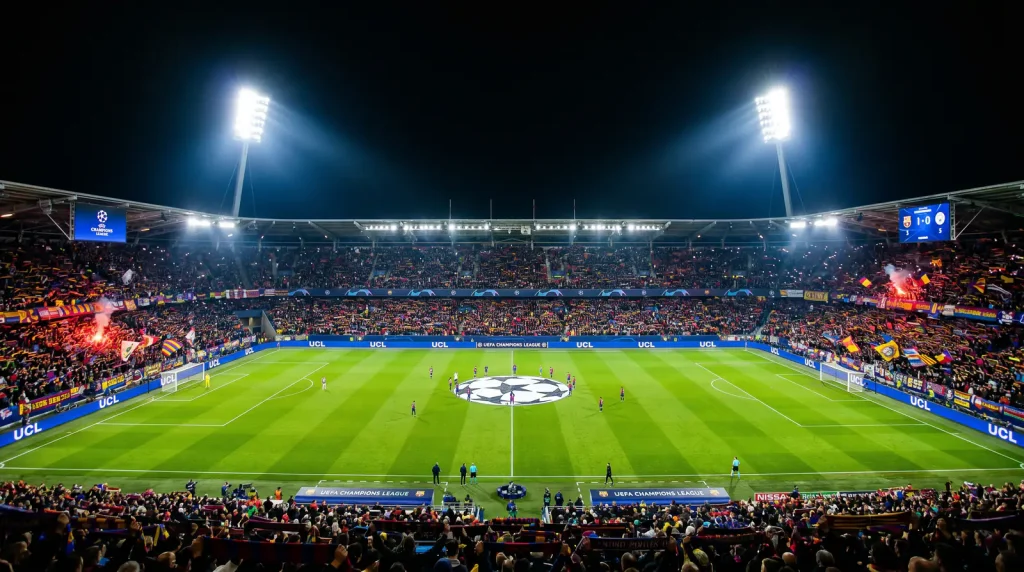
Champions League Betting — Different Rules, Different Edges
The first Champions League bet I ever placed was a home win on a group-stage match between a Portuguese side and a Swedish qualifier. The home team was priced at 1.35, I backed them confidently, and they lost 2-1. That was my introduction to European football betting — domestic logic does not always translate across borders, and the assumptions you carry from Premier League pricing can cost you money in continental competition.
The UK’s remote betting sector generated £2.6 billion in gross gaming yield from sports alone, and Champions League nights attract a massive share of that wagering volume. The competition is a premium product for bookmakers — heavily marketed, heavily televised, and heavily bet on by casual punters who watch the matches and back the names they recognise. That casual money creates opportunities, but only if you understand how Champions League matches differ structurally from domestic league football.
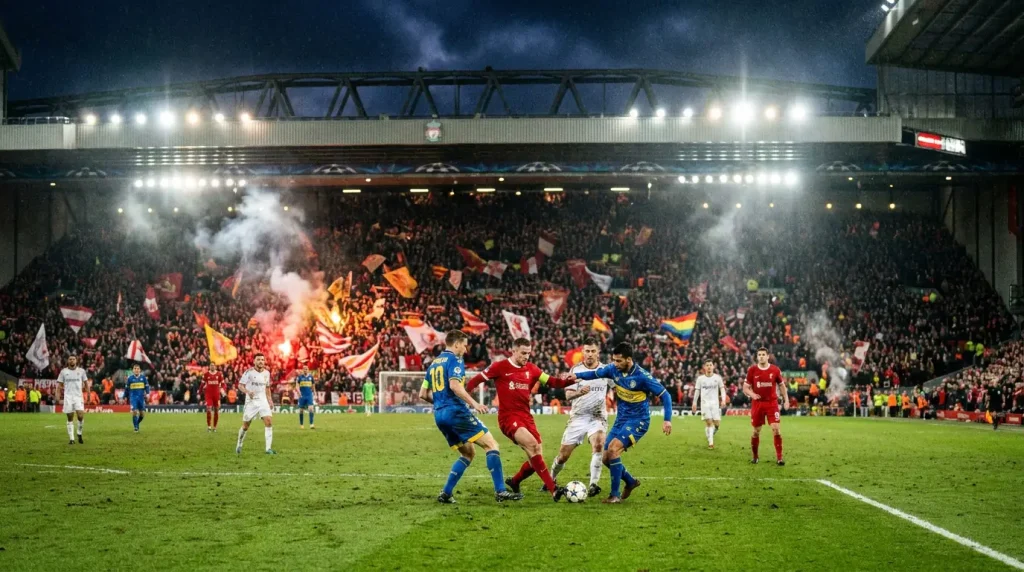
The most fundamental difference is familiarity — or the lack of it. In a Premier League fixture, both teams have played each other at least twice that season and multiple times in recent years. Managers know each other’s systems, players know their direct opponents, and the data sample is rich. In the Champions League, particularly in the early rounds, teams may be meeting for the first time in years, or ever. The models bookmakers use to price domestic fixtures rely on deep historical interaction data that simply does not exist for many European matchups.
New Format Implications for Betting Markets
The revamped Champions League format has changed the betting landscape in ways the market is still digesting. The old group stage — four teams per group, six matches, predictable permutations — has given way to a league phase where 36 teams each play eight matches against different opponents. The immediate betting implication is that motivation and match importance vary enormously.
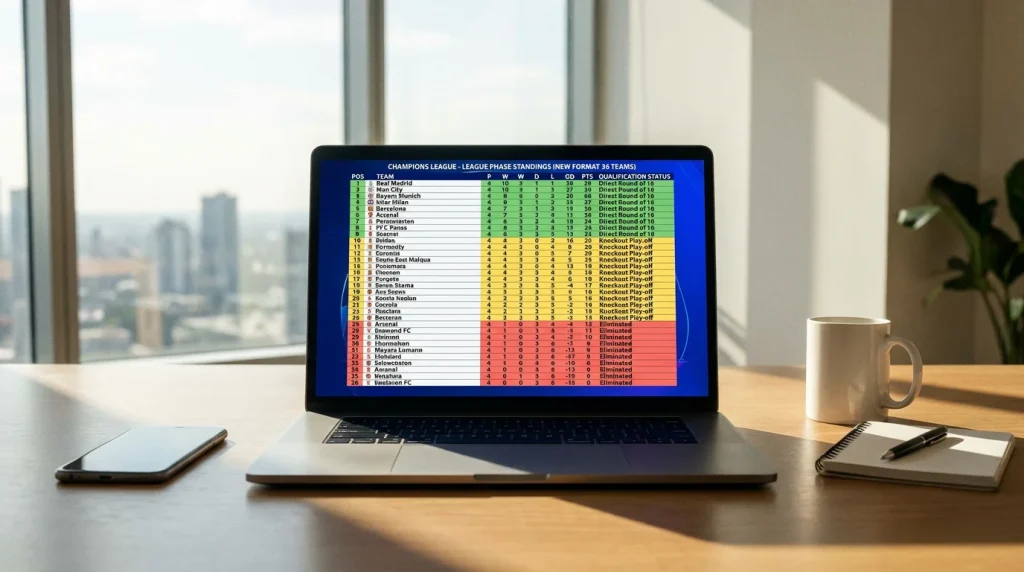
Under the old format, dead-rubber group matches in December were easy to identify. Under the new format, a team’s final league-phase match might determine whether they qualify automatically for the round of 16 or enter a two-leg knockout play-off. The stakes fluctuate from match to match in ways that the old format did not produce, and bookmakers are still calibrating how to price motivation differentials in this new structure.
I have found value in two specific areas of the new format. First, matches between teams at opposite ends of the league-phase table in rounds five through eight. A team safely qualified facing a team desperately needing points creates an asymmetric motivation scenario that the match odds do not always capture. Second, the knockout play-off round itself — two-leg ties between teams that narrowly missed automatic qualification. These teams are typically evenly matched but facing a format they have minimal experience with at this stage of the competition. The variance in two-leg ties is inherently higher than in single matches, and the bookmaker’s pricing of aggregate markets often underestimates the probability of an upset over 180 minutes.
H2H Records and UEFA Coefficients as Pricing Gaps
Head-to-head records in European football are seductive and misleading in roughly equal measure. A punter sees that Team A has beaten Team B in four of their last five meetings and assumes the pattern will continue. But those five meetings might span 15 years, during which both squads have turned over completely. The players are different, the managers are different, the tactical landscape has shifted, and the only thing connecting past results to the present fixture is the badge on the shirt.

I use H2H data sparingly and only when the meetings are recent — within the last three seasons — and involve broadly similar squads. A 2024 meeting between two teams with 80% squad overlap to today is meaningful. A 2018 meeting is noise. In-play betting accounts for more than 70% of UK sports wagers, and during Champions League matches the live odds algorithms lean heavily on recent H2H data, which means any overreliance on stale records creates a pricing gap that the live market inherits from the pre-match line.
UEFA coefficients — the ranking system that determines seeding — offer a different kind of edge. Coefficients reflect a club’s European performance over the previous five years, weighted toward recent seasons. A team with a strong coefficient but a weaker current domestic position is often overpriced by bookmakers because the market anchors on the coefficient rather than current form. Conversely, a team with a weak coefficient but strong current domestic form — a newly wealthy club or a team that has recently changed manager to a tactically superior coach — is often underpriced because the market views them through the lens of their historical European record.
Travel, Fatigue and Midweek Scheduling Effects
Champions League matches are played on Tuesday and Wednesday evenings. The domestic league continues the following weekend. This creates a measurable fatigue effect that most punters acknowledge in theory but fail to price accurately in practice.

My data shows that teams playing a Champions League away match on Wednesday and then a domestic league match on Saturday perform, on average, 8-12% below their baseline xG output in the Saturday fixture. The effect is strongest for teams that travelled long distances — a trip from England to Turkey, or from Spain to Russia — and weakest for short-haul European travel. I adjust my weekend models specifically for this effect, reducing the expected output of teams that played in Europe midweek and increasing the expected output of their domestic opponents who had a full week’s rest.
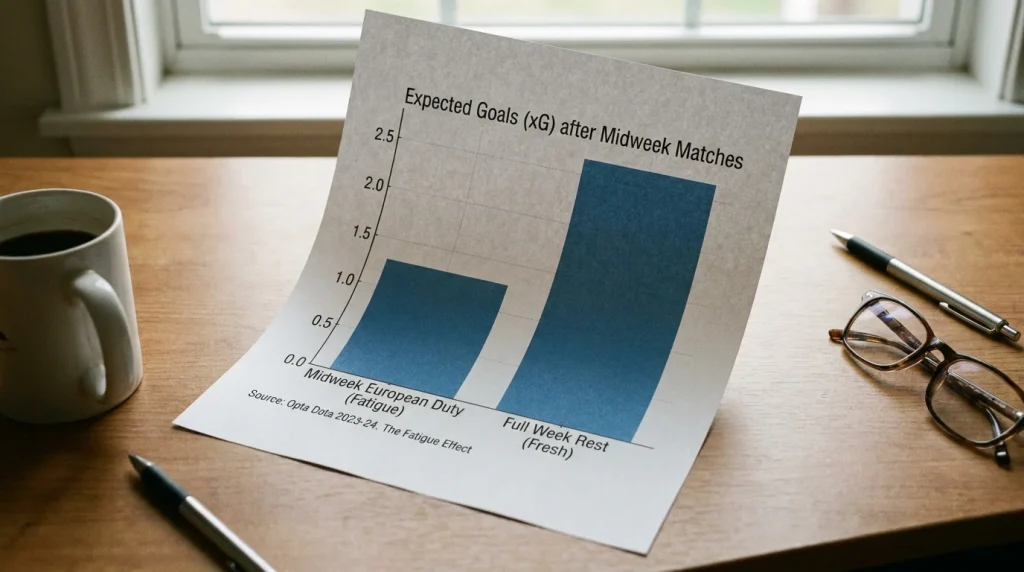
The market is partially aware of this dynamic — big-name teams returning from European duty are sometimes slightly longer in weekend odds than they would otherwise be. But the adjustment is often insufficient, particularly for less high-profile sides. A mid-table Premier League team that qualified for the Champions League through a cup win might receive no fatigue discount at all in weekend pricing, despite having played a demanding European away match 72 hours earlier.
Squad rotation adds another dimension. Managers who rotate heavily for the Champions League protect their first-choice XI for the weekend, reducing the fatigue effect but introducing lineup uncertainty that the weekend market may not fully capture. Managers who prioritise the Champions League and field their strongest side midweek create a double opportunity — back against them at the weekend when they are tired, and consider the European match itself where their best players are on the pitch. If you are interested in how these European dynamics connect with other continental leagues’ betting markets, the La Liga and Bundesliga guide covers league-specific angles for UK punters.
Does the new Champions League format change how matches should be bet on?
Yes. The league-phase format creates more varied motivation levels across rounds than the old group stage. Matches in rounds five through eight, where some teams are already qualified and others are fighting for survival, produce asymmetric motivation scenarios that bookmakers are still learning to price accurately. Two-leg knockout play-offs are another new element where the market underestimates upset probability over 180 minutes.
How reliable are H2H records when teams meet across different eras?
H2H records are only useful when the meetings are recent — within the last three seasons — and involve broadly similar squads. Meetings from five or more years ago reflect different players, managers and tactical systems and should be treated as noise rather than signal. The badge on the shirt does not carry historical performance forward when everything behind it has changed.
Articles
Prepared by the Football Bet Today editorial staff.
