
Scottish Premiership Betting Tips — Pricing Gaps North of the Border
 Available in US
Scotland — the Domestic League UK Bookmakers Underprice
I started betting on Scottish football almost by accident. A friend from Glasgow tipped me off to a Premiership match where the home side was massively underpriced based on their recent form, and I backed them at 2.40. They won 3-1. What caught my attention was not the result but the price — my model had their win probability at 52%, making 2.40 absurdly generous for a home favourite. In the Premier League, that kind of gap does not exist on a routine Saturday fixture. In Scotland, I found it nearly every week.
The UK remote betting sector generated GBP 2.6 billion in gross gaming yield from sports in the year to March 2025, and the overwhelming majority of that football revenue is concentrated on English leagues. Scottish football attracts a fraction of the betting volume, which means bookmakers dedicate fewer pricing resources to it. The models are thinner, the margins are wider, and the odds reflect less competitive pressure than anything south of the border. For a punter based in the UK with access to the same bookmakers who price English football, the Scottish Premiership is a market where analytical effort is disproportionately rewarded.
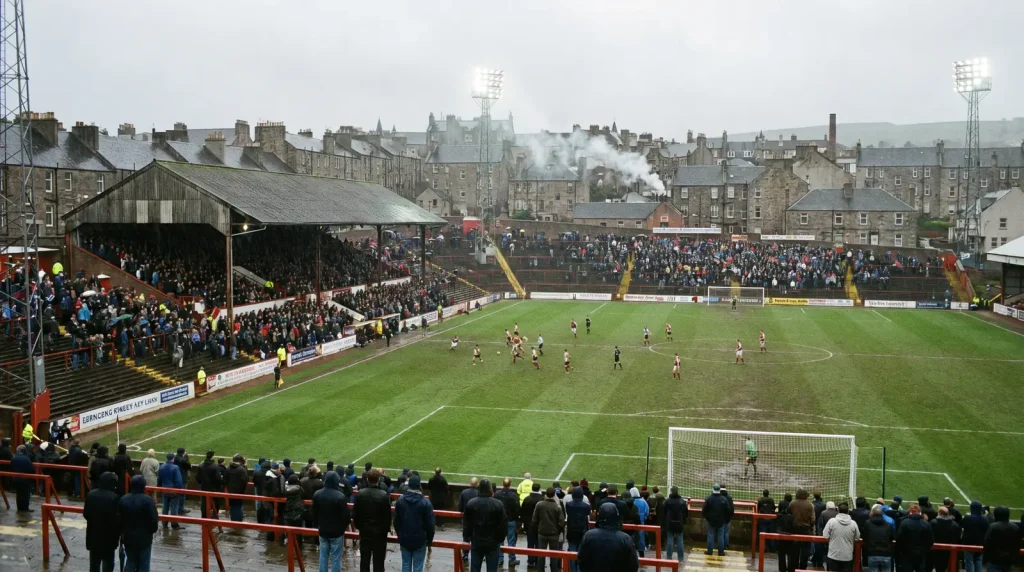
The Old Firm Effect on the Entire Market
Celtic and Rangers distort everything in Scottish football — the league table, the media coverage, and the betting markets. The two Glasgow clubs attract the vast majority of Scottish football betting volume, which means their fixtures are priced with genuine precision. A Celtic home win at 1.15 is usually priced accurately because the volume of money forces the bookmaker to sharpen the odds. The rest of the league does not receive that same attention.

The edge sits in matches that do not involve the Old Firm. Hearts versus Hibernian, Aberdeen versus Dundee United, Motherwell versus St Mirren — these fixtures attract minimal betting volume from the wider UK market. The bookmaker’s pricing model relies more heavily on automated inputs and less on manual oversight, and the margins are typically 2-3 percentage points wider than equivalent Premier League fixtures. I have found that the average overround on a non-Old-Firm Scottish Premiership match-result market is 106-108%, compared to 103-105% for a typical Premier League fixture.
The Old Firm clubs also create a unique dynamic in how the rest of the league is perceived. When Celtic beats a mid-table side 4-0, the market adjusts the mid-table side’s defensive rating downward — but that adjustment is often excessive because losing heavily to Celtic tells you almost nothing about how that team will perform against Aberdeen the following week. The quality gap between the Old Firm and the rest is so large that results against Celtic and Rangers are essentially noise for predicting outcomes in the non-Old-Firm matches where the value exists.
Home Advantage and the Winter Factor
Scottish football has a measurable home advantage that exceeds the Premier League average, and the reasons are partly environmental. Home teams in the Scottish Premiership win approximately 47-50% of matches in a typical season, compared to 44-46% in the Premier League. The gap widens in winter months — December through February — when Scottish weather and pitch conditions become a genuine factor.
Away travel in Scotland is not the short-haul domestic flight that Premier League sides enjoy. A trip from Aberdeen to Motherwell is four hours by coach. Ross County to Edinburgh is over three hours. In January, that travel happens in conditions that English lower-league sides would recognise but Premier League clubs do not face. The combination of travel fatigue, unfamiliar pitch conditions, and hostile winter atmospheres at compact Scottish grounds amplifies the home advantage in ways that bookmaker models — which apply a standard home-advantage adjustment — do not fully capture.
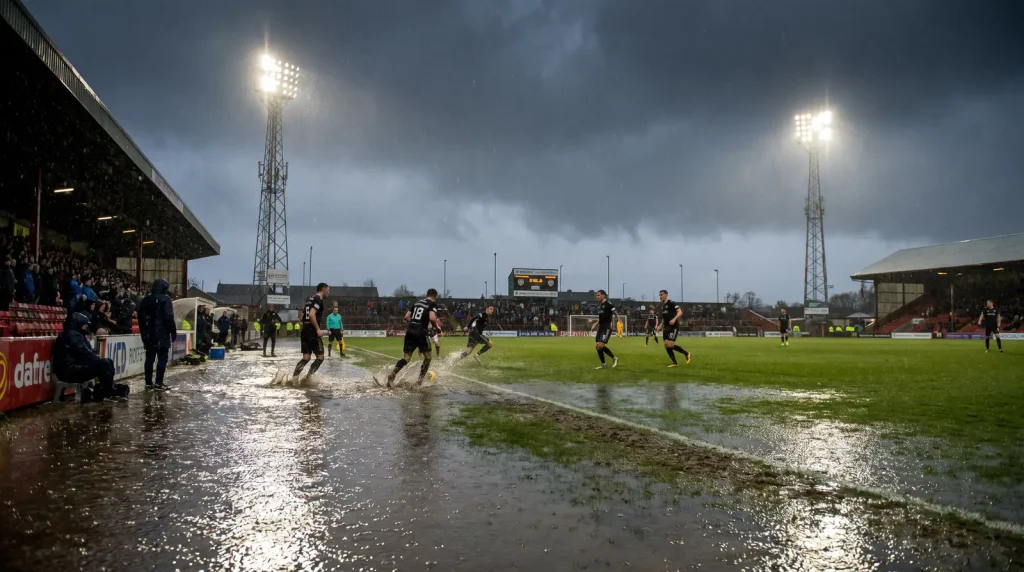
I apply a Scottish-specific home advantage adjustment to my model that is 4-6 percentage points stronger than my English Premier League adjustment, and I increase it further for winter fixtures involving long away travel. That single adjustment has been the largest contributor to my positive Scottish betting returns across three seasons. Nearly 95% of UK online gambling takes place from home, which means most punters placing Scottish bets have no visceral understanding of what a midwinter trip to Dingwall actually entails for the visiting squad. The data captures the outcome of that disadvantage even if the punter placing the bet does not.

Data Availability and the Analytical Trade-Off
The biggest barrier to profitable Scottish football betting is data quality. xG data for the Scottish Premiership is published by some providers but coverage is less comprehensive than for the Premier League. Match-level xG is usually available; detailed shot maps, pressing metrics, and progressive passing data are patchy. You are working with fewer tools than you would for an English top-flight fixture.
My workaround is a hybrid model that uses xG where available and supplements it with results-based metrics where xG is missing. Goals scored and conceded over the last eight matches — separated into home and away — provide a reasonable proxy for attacking and defensive quality. Shots on target data, which is available for every Scottish Premiership match through standard match reports, adds a second layer. Clean sheet frequency and first-goal timing complete the picture.
The model is less precise than my English football model, but it does not need to be precise — it needs to be more precise than the bookmaker’s model for the same matches, and the bar is lower because the bookmaker’s pricing resources are thinner. A model that would produce marginal edges in the Premier League can produce substantial edges in the Scottish Premiership simply because the competition for pricing accuracy is weaker. For punters interested in how similar data limitations affect betting in English lower tiers, the League One and League Two guide covers the same analytical trade-offs at a different level of the football pyramid.

Why are Scottish Premiership odds less accurate than Premier League odds?
Scottish football attracts a fraction of the betting volume that English football generates. Lower volume means less competitive pressure on bookmaker pricing, fewer manual adjustments by trading teams, and wider margins. The bookmaker"s automated model handles Scottish fixtures with less data and less oversight than Premier League matches, creating more frequent and larger pricing errors that analytical punters can exploit.
Should results against Celtic and Rangers be included in form analysis?
Only with heavy context adjustment. The quality gap between the Old Firm and the rest of the Scottish Premiership is so large that results against Celtic and Rangers tell you very little about how a team will perform against non-Old-Firm opponents. I weight Old Firm results at roughly 30% of the value I assign to other matches when calculating rolling form metrics. Alternatively, exclude them entirely and use only non-Old-Firm matches for your form analysis.
Articles
Published by the Football Bet Today team.
