
Football Betting Mistakes — the Errors That Drain Your Bankroll Silently
 Available in US
The Mistakes You Do Not Notice Are the Ones That Cost You
I kept meticulous records from my second year of betting onwards — every selection, every stake, every result. When I reviewed the first full season of data, the losing bets were not the problem. The problem was a pattern of small, repeated errors in how I selected, staked and timed those bets. Each individual mistake cost pennies. Across 600 bets, they cost hundreds of pounds. The frustrating part was that every single mistake was avoidable, and most of them are mistakes I still see experienced punters making today.
With 47% of UK adults participating in some form of gambling and 5.8% betting specifically on football, the scale of money lost to avoidable errors is enormous. This is not about bad luck or poor selections. It is about structural mistakes in process — the decisions around betting that have nothing to do with which team wins and everything to do with how you manage the activity itself.

Backing Your Own Team — the Bias You Cannot See
Every punter knows they should not bet on their own team. Almost every punter does it anyway. I supported a Championship side for years and I can trace at least GBP 400 in losses directly to bets I placed on them that my model did not support. The emotional attachment distorted my probability estimates in ways I could not detect in real time — I consistently overestimated their chance of winning by 5-8 percentage points compared to my model’s output for the same fixture.
The bias operates below conscious awareness. You watch your team every week. You see the near-misses, the unlucky defeats, the promising patterns that “should” produce results. That immersion creates an illusion of superior knowledge — you believe you understand your team better than the bookmaker does. In reality, you understand them differently, not better, and the emotional investment systematically inflates your assessment of their quality.

My rule is absolute: I do not bet on matches involving the team I support. Not for, not against. The temptation is removed entirely, and my bankroll is better for it. If you cannot bring yourself to exclude your team completely, at minimum require that your model confirms value before placing the bet. If the model says no value, walk away regardless of what your gut says. Among the 87% of male sports bettors who placed a bet in 2025, a meaningful proportion will have lost money specifically because they backed their own side at prices that did not reflect fair probability.
Chasing Losses — the Spiral That Feels Like Strategy
Saturday afternoon, three bets down, bankroll stinging. You open the app and see a 7pm kick-off with a match that looks straightforward. You have not analysed it. Your model has not flagged it. But you need to “get back to even” and the price on the home win looks short enough to be safe. You double your usual stake. This is chasing, and it is the single most destructive behaviour pattern in football betting.
Chasing feels rational in the moment because the brain frames the day’s losses as a hole that needs filling. The urgency to recover overrides the process that produced your earlier selections. The stake increase feels justified because the short price “guarantees” a return. Neither is true. The day’s losses are already in the past — they do not create a hole that today’s bets can fill, because each bet is independent. And a short price does not guarantee anything; a 1.25 favourite loses roughly one match in five, and that loss at double stakes accelerates the drawdown.
The UK online gambling market processes roughly 290 million sports bets per month, and a significant proportion of evening and late-night bets are chasing activity — punters trying to recover afternoon losses on fixtures they have not researched. The bookmakers know this. Evening kick-off odds on popular fixtures are often marginally tighter than afternoon odds on the same match would be, because the bookmaker understands that chasing punters are less price-sensitive.

Ignoring Overrounds — Paying a Tax You Do Not See
Ask a casual punter what the overround is on the match they just bet on and most will not know. Ask them whether they compared prices across bookmakers before placing the bet and most will say no. These two failures — not knowing the margin and not seeking the best price — are the equivalent of paying full retail for a product available at 20% off next door.
The Remote Gaming Duty increase to 40% in April 2026 has widened bookmaker margins across the board. HM Treasury expects operators to pass up to 90% of the increase onto consumers. That passthrough arrives as wider overrounds, which means the cost of ignoring margins is higher now than it was 18 months ago. A punter who placed all their bets with a single bookmaker running a 106% overround in 2024 might now face 108% from the same operator. The cumulative cost of that 2% increase across a season of betting is real and measurable.
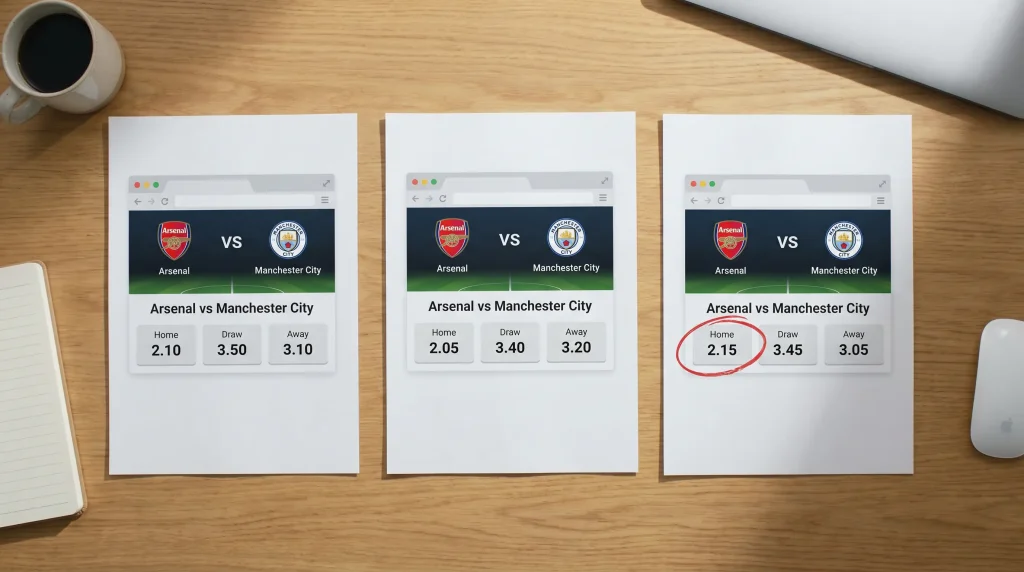
The fix is mechanical: before every bet, check at least three bookmakers. Take the best price. Log the price difference. After 100 bets, add up the savings. That number — typically 2-4% of total turnover — is pure profit you would have left on the table otherwise. It requires no analytical skill, no model, no special knowledge. Just discipline and a second browser tab.
Overcomplicating Accumulators — the Thrill That Bleeds You Dry
Accumulators are the most popular bet type among UK recreational punters and the most profitable product for bookmakers. That correlation is not coincidental. Every leg you add to an accumulator multiplies the bookmaker’s margin. A four-fold where each leg carries a 5% overround does not carry a combined 5% overround — it carries roughly 20%, because the margins compound multiplicatively. By the time you reach a seven-fold or a ten-fold, the effective margin against you is 35-50%, which means you need to be dramatically better than the bookmaker at pricing matches to break even.
I am not saying accumulators are always wrong. A two-fold or three-fold where each leg carries genuine value — confirmed by your model, not by gut feeling — is a legitimate bet that concentrates edge at higher odds. The problem is that most punters build accumulators by adding legs that “look good” rather than legs where their model identifies value, and each additional unresearched leg adds margin without adding edge.
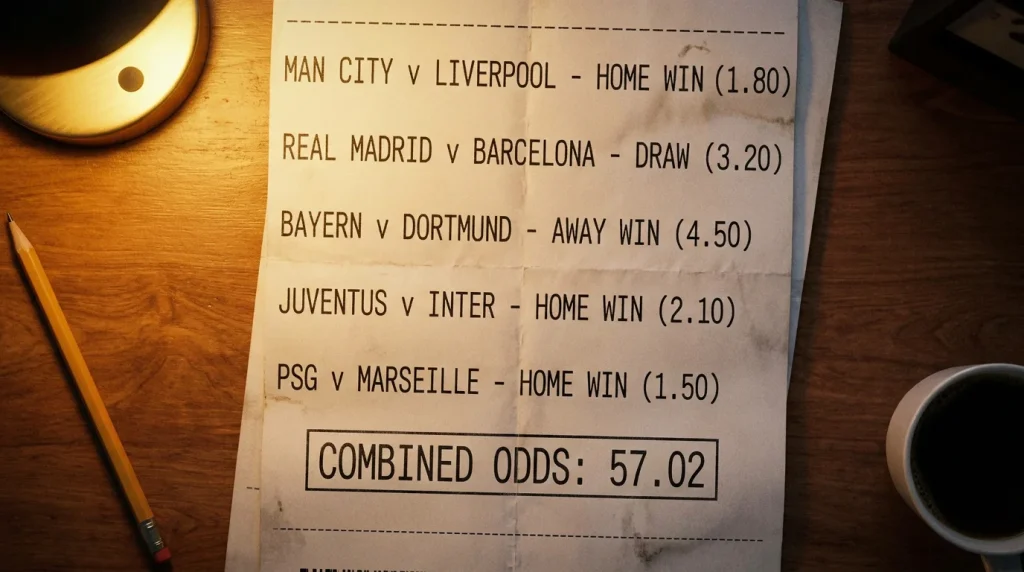
My rule: never more than four legs, every leg must show positive expected value independently, and the combined stake must be no more than half what I would stake on any single leg as a standalone bet. That framework keeps accumulator betting within the bounds of disciplined wagering rather than the recreational lottery it becomes for most punters. For a deeper look at how to structure accumulators around correlation analysis, the accumulator tips guide covers the mechanics in detail.
What is the most costly mistake recreational football punters make?
Chasing losses is the single most destructive error. It combines emotional decision-making, increased stakes, reduced research quality and selection of fixtures not flagged by any analytical process. The compounding effect of chasing — larger losses leading to larger stakes leading to larger losses — can drain a bankroll in a single matchday. Setting a hard daily loss limit and enforcing it mechanically is the most effective prevention.
How much does ignoring price comparison cost over a season?
A punter who places all bets with a single bookmaker instead of comparing three to five operators typically leaves 2-4% of total turnover in unrealised savings. On annual turnover of GBP 5,000, that is GBP 100-200 in lost value — money that would flow directly to your bottom line with no change in selection quality. The cost increases when bookmaker margins are wider, which is the current environment following the 2026 duty increase.
Articles
Published by the Football Bet Today team.
