
First Goalscorer Tips Today — Player-Level Data for Goal Markets
 Available in US
First Goalscorer — A High-Odds Market With Quantifiable Edges
I once backed a centre-back at 33/1 to score first in an FA Cup tie. He headed in a corner after six minutes. Luck? Partly. But I had checked three things before placing that bet: the player was on near-post corner duty, the opposition conceded from set pieces at nearly double the league average, and the bookmaker had priced him as an afterthought because he was a defender. That is the first goalscorer market in miniature — high odds, low hit rate, but edges that are genuinely quantifiable if you look at the right data.
Football is the most wagered-upon sport in Britain, with 5.8% of the population actively betting on matches. Within that ecosystem, first goalscorer is one of the most popular player-level markets, yet most punters approach it by simply backing the team’s top striker at whatever price is offered. That approach ignores the mechanics of how first goals actually happen. Across a full Premier League season, roughly 25-30% of first goals come from set pieces — corners, free kicks, penalties. Another 15-20% come from players who are not the team’s primary striker. The market consistently underprices these non-obvious scorers because public money floods toward headline names.
Shot Volume, Penalty Duties and Set-Piece Roles
The three data points I check before any first goalscorer bet are shot volume, penalty responsibility and set-piece involvement. They sound basic. They are basic. But combining them correctly separates value bets from lottery tickets.
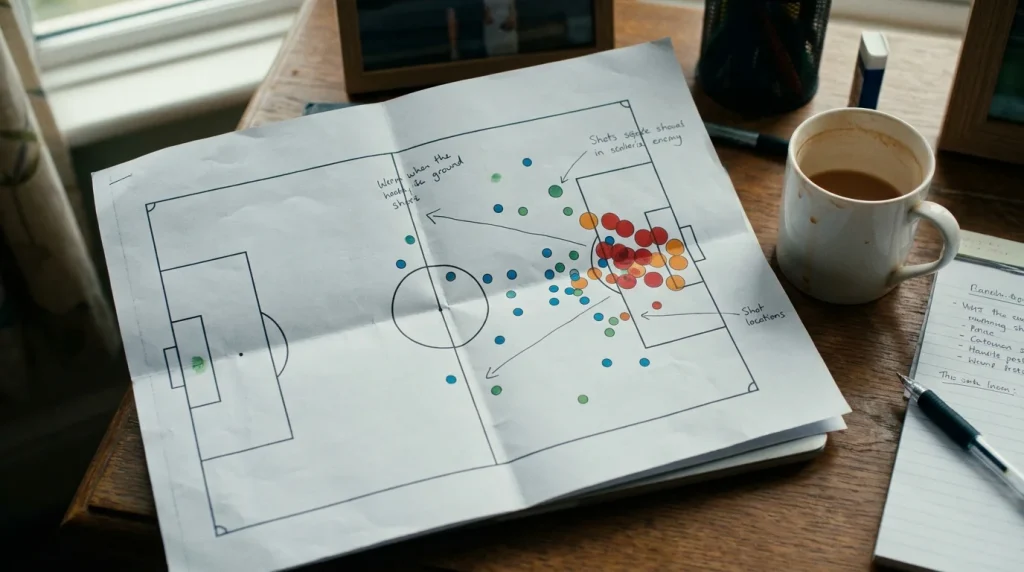
Shot volume matters because a player who takes five shots per match has more opportunities to score first than a player who takes one. I look at shots inside the box specifically — shots from outside the area convert at about 3-5%, while shots inside the six-yard box convert at 30% or higher. A midfielder who drifts into the box regularly and takes three or four shots per match from central positions inside the area is often a better first goalscorer candidate than a wide forward who takes more total shots but from less dangerous positions.
Penalty duties are the single biggest edge in this market. A designated penalty taker on a team that wins penalties frequently has a structural advantage — penalties convert at roughly 75-80%, and if one is awarded in the first half before anyone else scores, the penalty taker scores first. I track penalty frequency by team over the last 20 matches and cross-reference with confirmed penalty taker status. When a high-penalty-winning team faces a side that commits fouls inside the box at an above-average rate, the penalty taker’s first goalscorer odds often underestimate the true probability.

Set-piece roles extend beyond penalties. Corner routines assign specific players to specific zones — near post, far post, edge of the area. Free kicks within shooting range go to designated takers. If a player is both the corner taker and the near-post runner on alternative routines, or if he takes direct free kicks from 20-25 yards, those set-piece opportunities add meaningfully to his first goalscorer probability. Online platforms now account for 78.47% of UK sports betting revenue, and the detailed player-level data available through those platforms makes this kind of analysis accessible to anyone willing to spend 15 minutes per fixture.

Why Confirmed Line-Ups Change Everything
I learned this lesson the hard way. Backed a striker at 5/1 to score first, felt confident about the data, then watched from my sofa as the team news dropped an hour before kick-off and my selection was on the bench. He came on at 65 minutes with the score already 2-0. Dead bet.
First goalscorer markets are uniquely sensitive to line-up confirmation because a player who starts has 90 minutes of opportunity while a substitute might get 20 or 30. The probability gap between a starter and a substitute in this market is not proportional to minutes — a starter is present for the opening phase when the first goal is most likely to fall. Across the Premier League, approximately 40% of first goals arrive in the first 30 minutes. A player who misses that window because he is sitting on the bench has lost the highest-probability portion of the match.
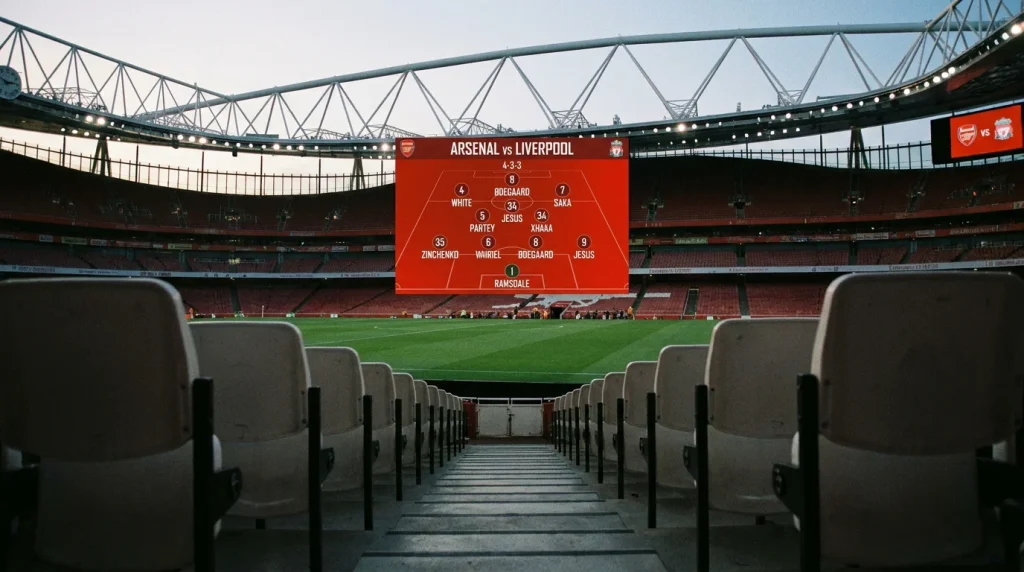
My rule is absolute: I do not place a first goalscorer bet until the line-up is confirmed. This means betting in the window between team news — typically one hour before kick-off — and the match starting. The prices move in that window, sometimes significantly, so I pre-identify my targets and act immediately when the team sheet drops. Waiting until five minutes before kick-off usually means the market has already adjusted.
Rotation is particularly relevant in weeks with midweek fixtures. A manager resting his first-choice striker for a weekend match often replaces him with a player whose first goalscorer odds are much longer — and sometimes too long, given that the replacement may be highly motivated and facing a defence that has prepared for a different attacker.
How Bookmakers Set First Goalscorer Prices
Understanding the pricing mechanism helps you spot where it breaks down. Bookmakers set first goalscorer odds primarily from two inputs: the player’s overall goal probability for the match and the number of players in the market. The overround on a first goalscorer market is typically enormous — 150% to 180% — because there are 20 or more possible outcomes. That margin has to come from somewhere, and it comes disproportionately from the longer-priced selections.
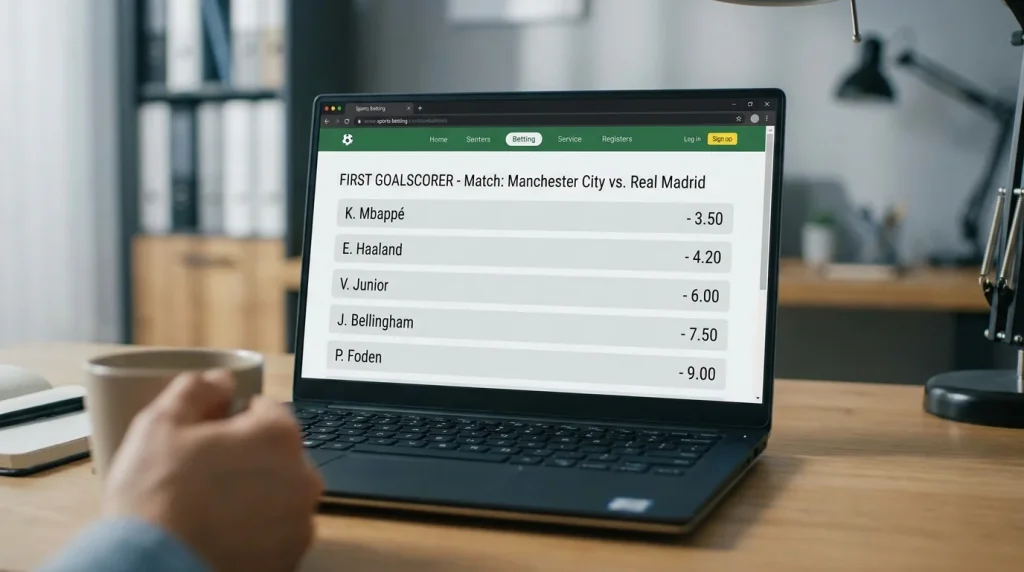
What this means in practice is that the favourites — the main strikers priced at 4/1 to 7/1 — are usually priced fairly or even slightly tight. The value, when it exists, tends to sit in the 12/1 to 25/1 range — players who are not the obvious pick but who have genuine first-goal credentials based on shot data, set-piece roles or penalty duties. The bookmaker’s margin is loaded onto these longer prices, but the loading is often crude. A player genuinely deserving 14/1 might be priced at 20/1 because the bookmaker’s model does not fully account for a specific set-piece routine or a recent tactical shift that puts the player in more dangerous positions.
If you are interested in how goalscorer markets work beyond the first goal — particularly the anytime goalscorer market where substitutes and late goals matter more — the anytime goalscorer guide covers the differences and where each market offers better value.
Do penalty takers have a meaningful edge in first goalscorer markets?
Yes. A designated penalty taker on a team that wins penalties frequently has a structural probability advantage that bookmakers often underprice, particularly at longer odds. Penalties convert at roughly 75-80%, and when one is awarded before any other goal, the taker scores first by default. Tracking penalty-winning frequency by team is one of the most reliable edges in this market.
How important are confirmed line-ups for goalscorer bets?
Critical. A player who starts has access to the opening 30 minutes when approximately 40% of first goals are scored. A substitute misses that window entirely. I never place a first goalscorer bet before the line-up is confirmed, which means acting in the one-hour window between team news and kick-off when the market is still adjusting.
Articles
Published by the Football Bet Today team.
